

Claude 4.5 Release: What Construction and Field Service Leaders Need to Know About the Latest AI Breakthrough
The enterprise AI landscape just shifted. Anthropic's release of Claude Sonnet 4.5 marks a significant leap forward in what AI agents can accomplish in real-world business environments—and for construction, field services, and manufacturing operations, the timing couldn't be better.
While the industry has been watching foundation model releases with cautious interest, this particular advancement deserves attention from operations leaders for a simple reason: the gap between AI capability and practical business application just narrowed considerably.
What Makes Claude 4.5 Different
Claude Sonnet 4.5 represents Anthropic's most capable model to date, optimized for the kind of complex, multi-step workflows that define enterprise operations. The numbers tell a compelling story:
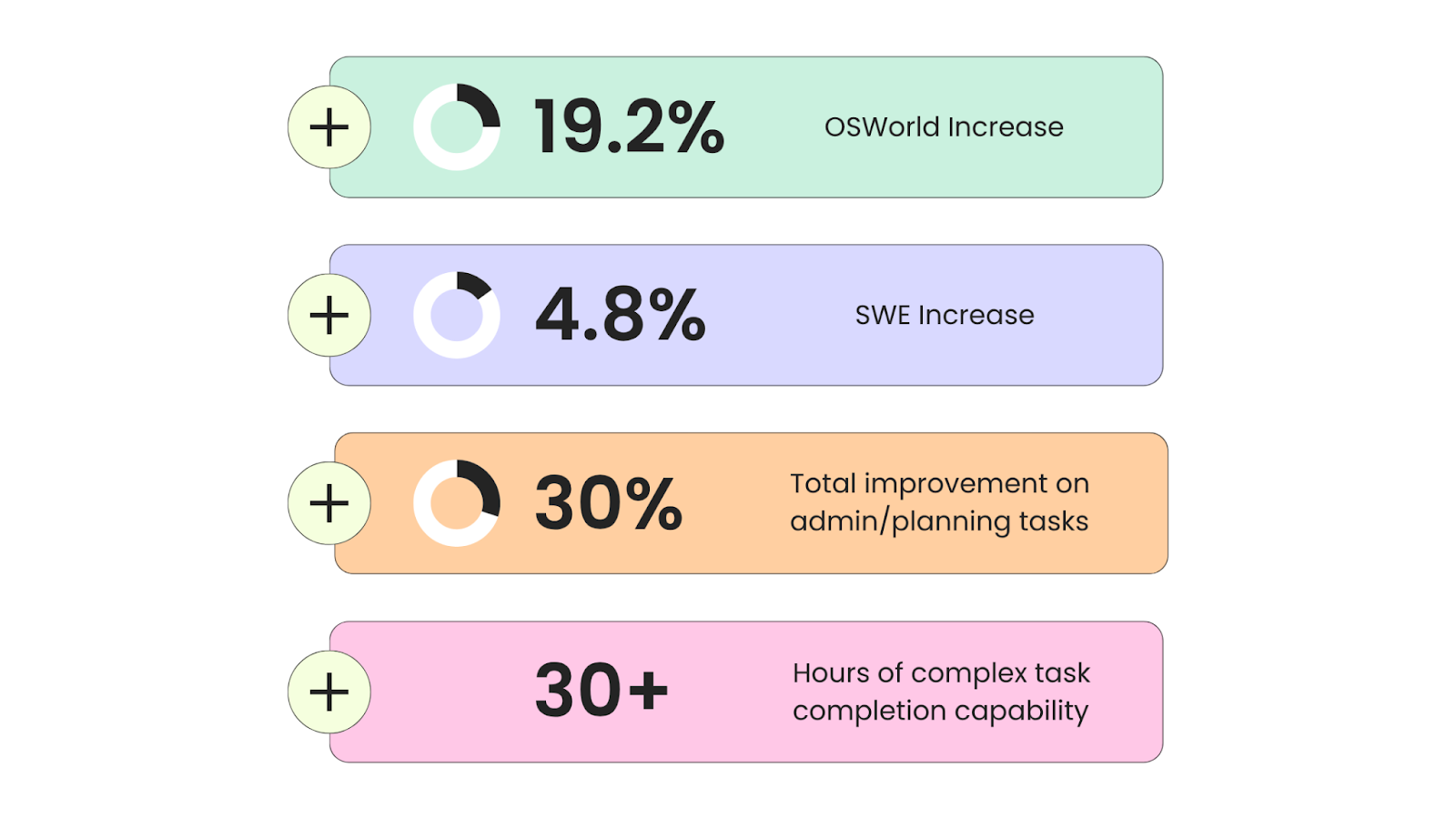
- 77.2% on SWE-bench Verified (jumping to 82% with additional compute)—outperforming GPT-5's 72.8% and previous Claude models
- 61.4% on OSWorld (real-world computer tasks)—a 45% improvement over Claude 4's 42.2% just four months ago
- Can maintain focus for 30+ hours on complex, multi-step tasks without losing context
- 18% improvement in planning performance and 12% improvement in end-to-end task completion (as measured by Cognition AI's Devin platform)
Key Capabilities that 4.5 Brings for Business Operations:
- Extended reasoning chains for multi-document analysis (critical for RFPs, submittal packages, and complex bid reviews)
- Improved structured output generation for seamless CRM and ERP integration
- Enhanced instruction-following for complex conditional logic and business rules
- Better handling of domain-specific terminology across industries like construction, field service, and manufacturing
- More reliable autonomous task execution with fewer errors and less need for human oversight
Unlike previous iterations focused primarily on conversational ability, Claude 4.5 emphasizes the specific capabilities that matter for business automation: extended reasoning chains for multi-document analysis, improved structured output generation for CRM integration, enhanced instruction-following for complex conditional logic, and better handling of domain-specific terminology across industries like construction and manufacturing.
Why This Matters for Field Service and Construction Operations
If you're leading operations at a mid-market HVAC company, commercial contractor, or manufacturing firm, you've likely experienced the AI hype cycle: impressive demos followed by disappointing real-world results. The challenge has never been whether AI could theoretically help—it's whether it could reliably execute business-critical tasks without constant human intervention.
Claude 4.5's improvements directly address the friction points that have held back AI adoption in operations-heavy industries:
1. Document Understanding That Actually Works
Previous AI models struggled with the messy reality of construction documentation—handwritten field notes, photo-based quotes, RFPs with inconsistent formatting, submittal packages with missing sections. Claude 4.5's enhanced reasoning and multi-step task capabilities (proven by its ability to work autonomously for 30+ hours on complex projects) mean AI agents can now reliably:
- Extract critical data from handwritten technician notes or field photos
- Parse complex RFP documents and identify requirements buried across 100+ pages
- Review submittal packages for completeness before they're sent to general contractors
- Understand context across multiple document types in a single workflow
This isn't just an incremental improvement—it's the difference between an AI tool that needs constant checking and one that can be trusted to handle tasks autonomously.
2. Conversational AI That Sounds Human (Because Your Customers Notice)
For customer-facing applications like after-hours receptionists or outbound appointment scheduling, the quality of AI-generated conversation matters enormously. A prospect can tell within seconds whether they're talking to a sophisticated system or a robotic script-reader.
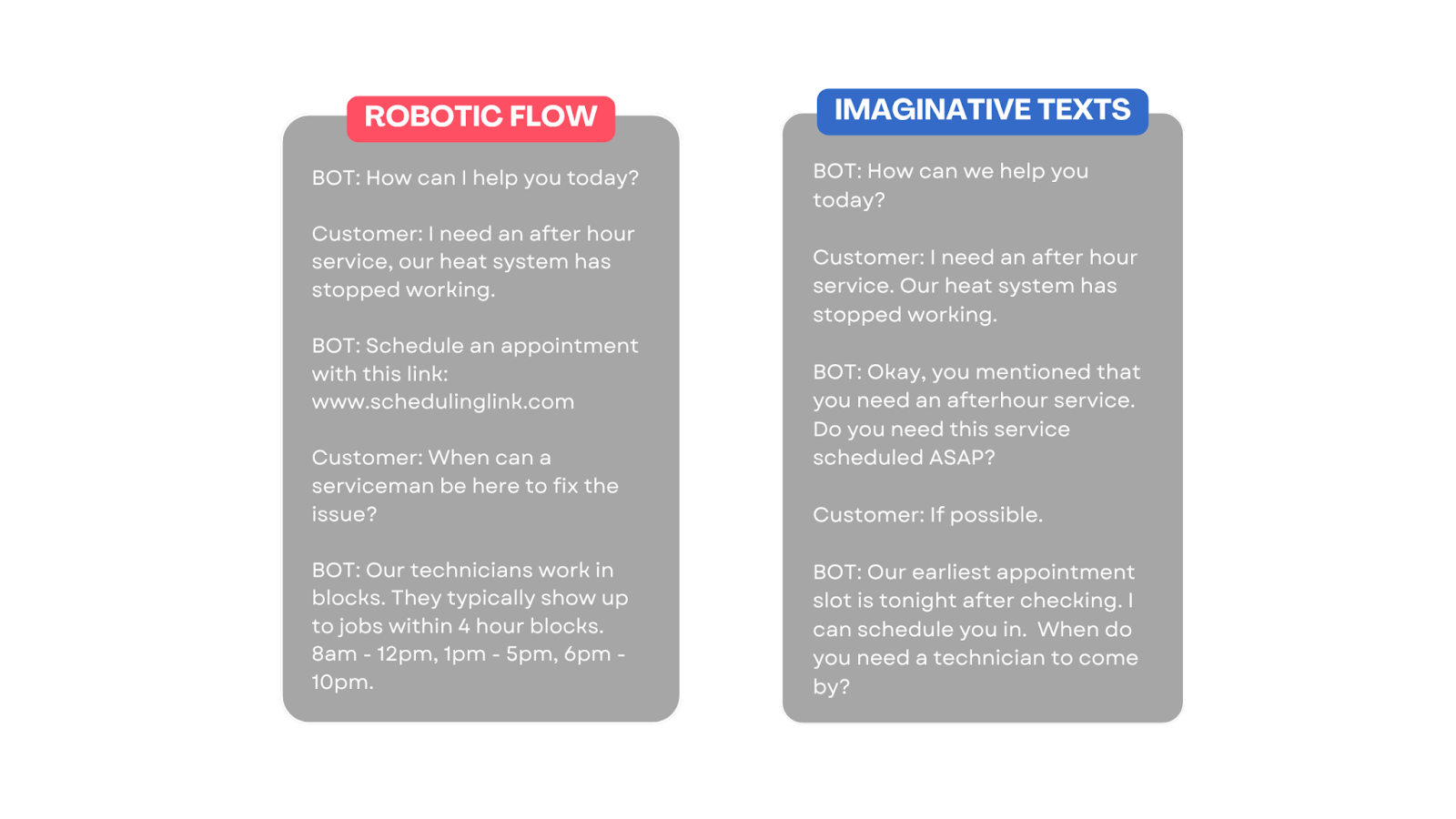
Claude 4.5's natural language improvements and 61.4% success rate on real-world computer tasks (OSWorld benchmark) mean AI agents can now:
- Handle unexpected customer questions without breaking conversation flow
- Adapt tone appropriately for different interaction types (emergency calls vs. routine scheduling)
- Navigate complex scheduling logic while maintaining a human-sounding dialogue
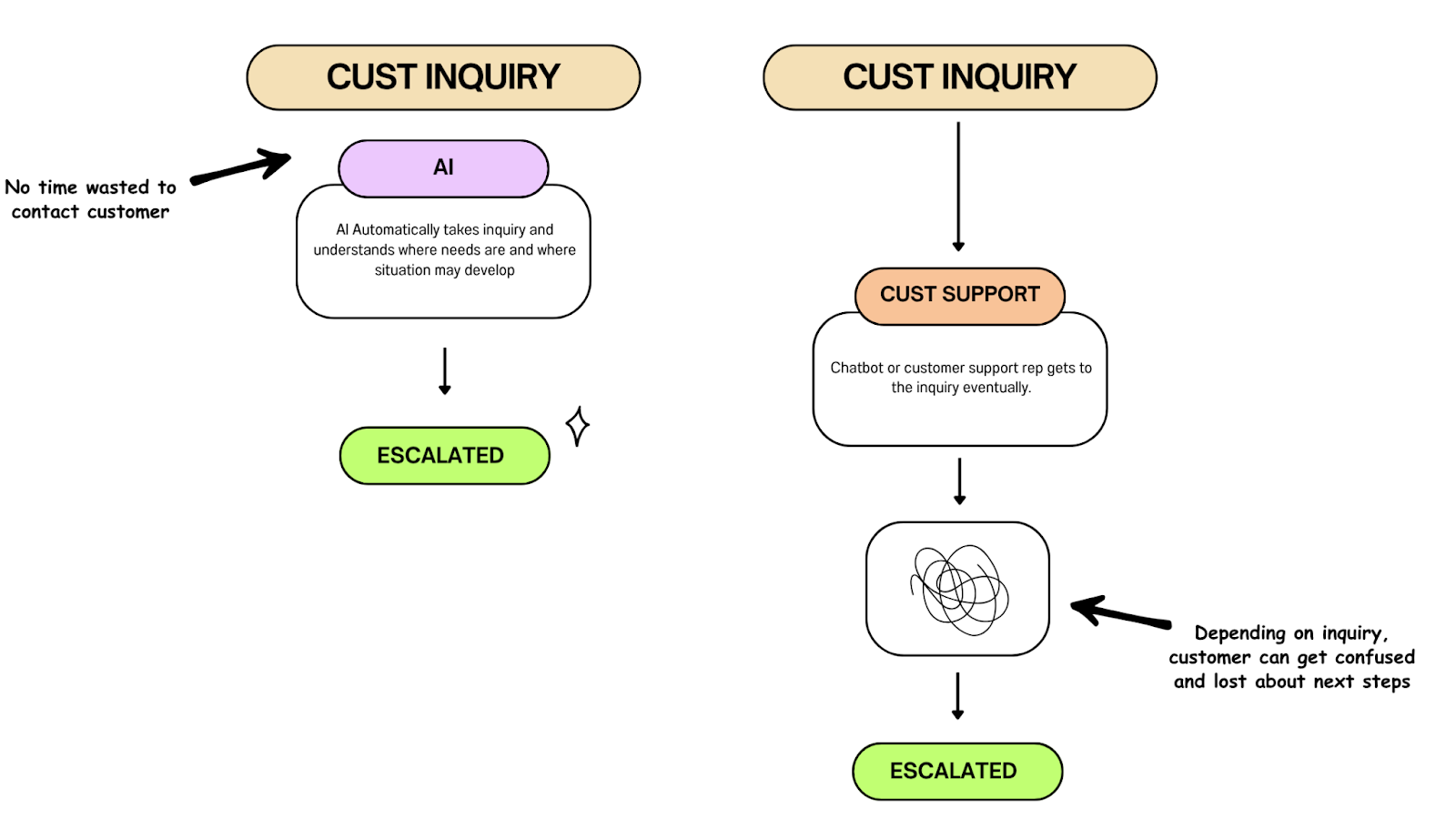
- Recognize when to escalate to human team members seamlessly
For a commercial HVAC company taking after-hours emergency calls or a solar installer doing high-volume appointment setting, this translates directly to customer experience quality and conversion rates.
3. The Six-Month Competitive Window
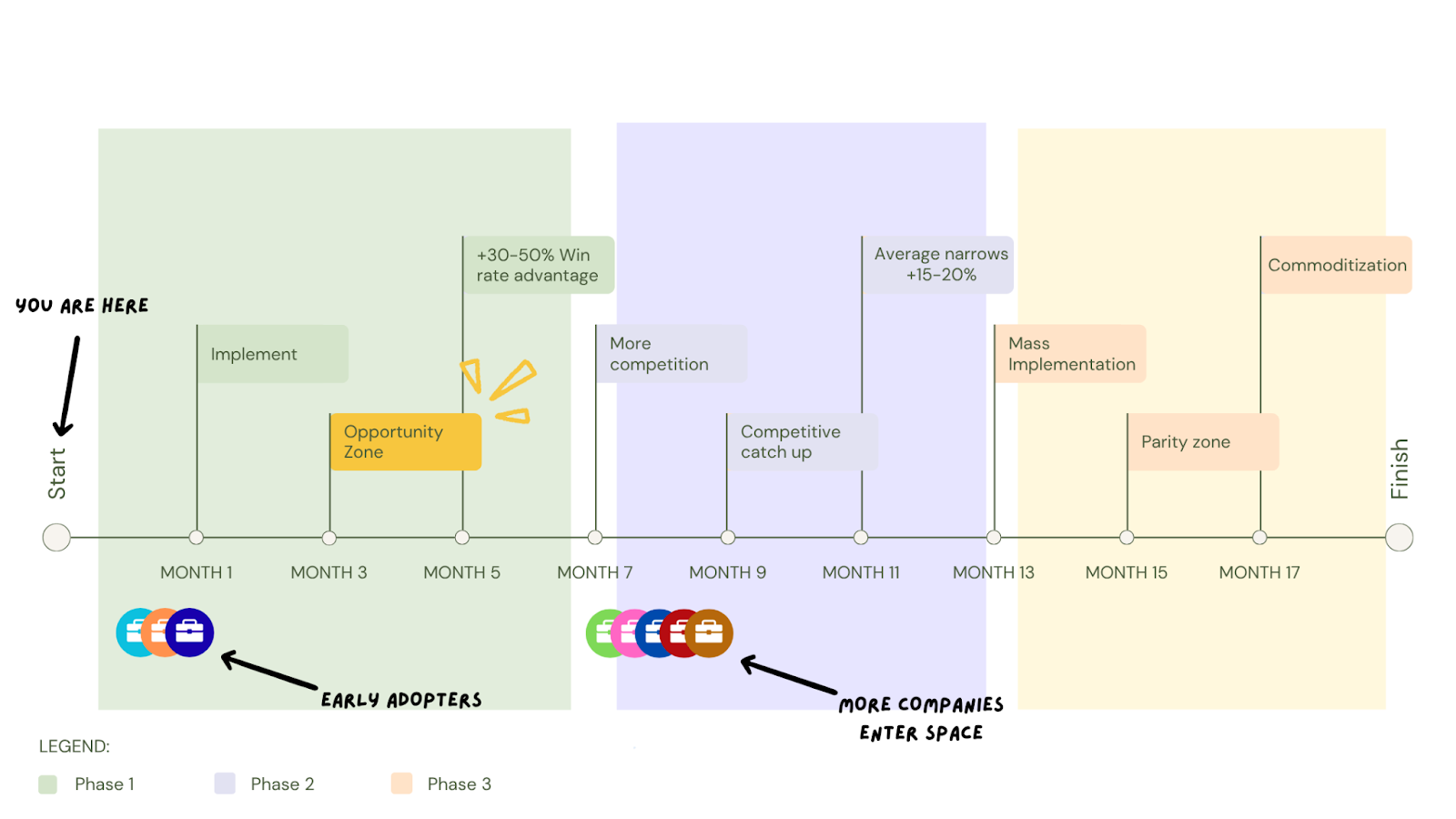
Here's what matters about Claude 4.5: it crosses the threshold where AI agents can reliably handle tasks that previously required human judgment. That threshold crossing creates a short-term competitive window.
In field service and construction, speed-to-lead is everything. The first company to respond wins 35-50% more jobs, according to industry data. Right now, your competitors are either ignoring AI entirely or struggling with implementations that don't quite work reliably enough.
Claude 4.5's improvements—particularly in handling unexpected scenarios and maintaining context through complex workflows—mean AI agents can now be deployed with confidence as first-line responders. Not "assistant to the CSR" but "autonomous first touch that escalates strategically."
The companies that deploy this capability in the next 6-12 months will establish a lead-response advantage that competitors will struggle to match. By the time others catch up, you'll have processed thousands of additional leads and refined your automation to the point where it's a sustained competitive moat.
The question isn't whether to implement AI agents—it's whether you'll be early or late to a capability that's about to become table stakes.
4. Breaking the Linear Scaling Model
Traditional field service growth hits a predictable wall: to handle 30% more call volume, you hire 30% more CSRs. To process 50% more quotes, you add estimators. Revenue scales linearly with headcount, and margins compress.
Claude 4.5's reliability improvements change this equation. AI agents can now handle the complexity and variability of real customer interactions—not just the scripted happy path. They can manage scheduling conflicts, understand regional service area nuances, follow escalation protocols, and maintain context across multi-touch customer journeys.
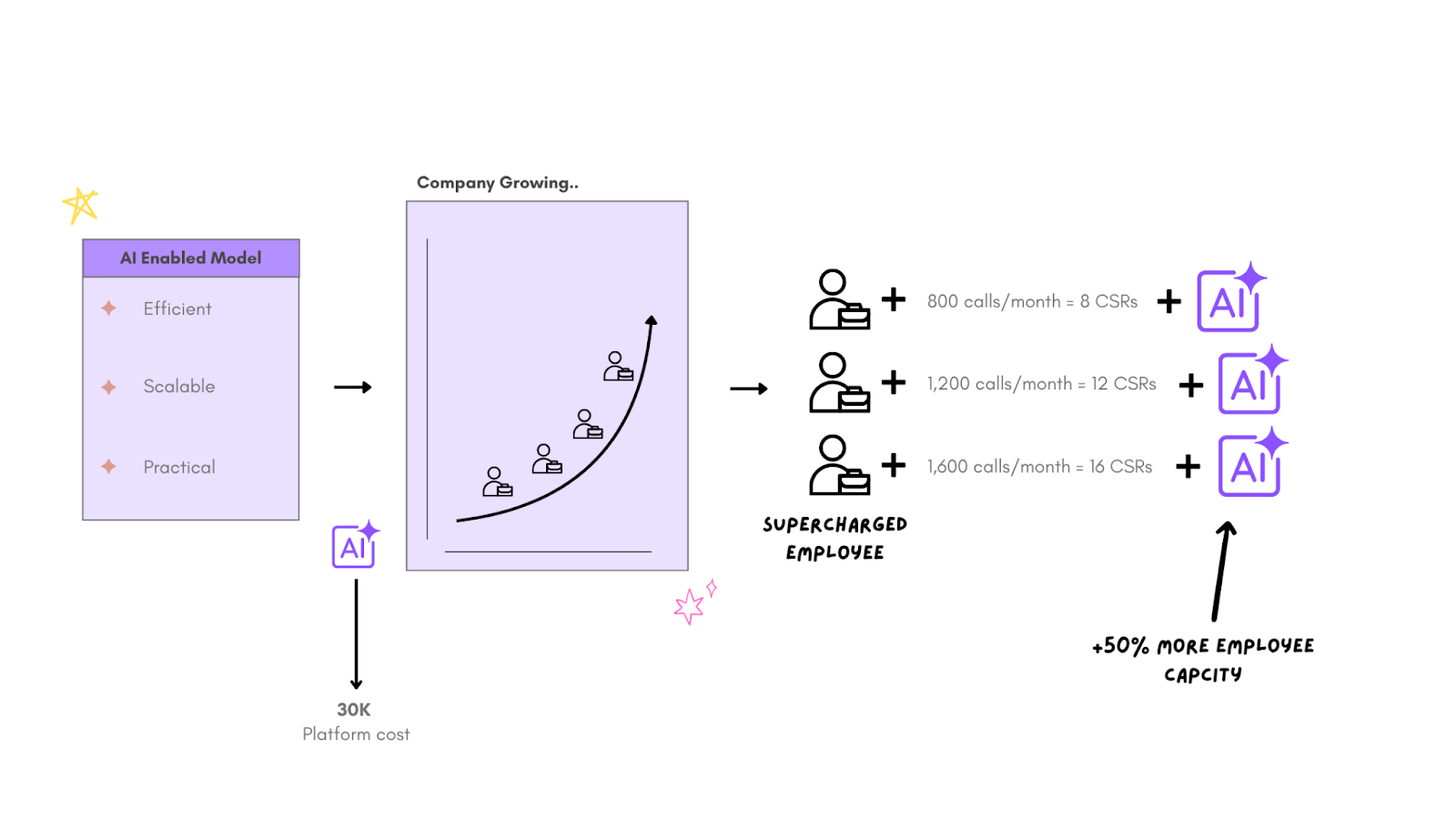
For PE-backed service rollups managing 5-10 brands, this breaks the traditional scaling model: instead of duplicating CSR teams across each acquisition, you can centralize and automate first-touch customer engagement while maintaining brand-specific conversation flows and business rules.
Result: one Atreyus customer scaled from 800 to 1,200 monthly service calls without adding a single CSR, while improving average response time from 4.2 hours to 11 minutes.
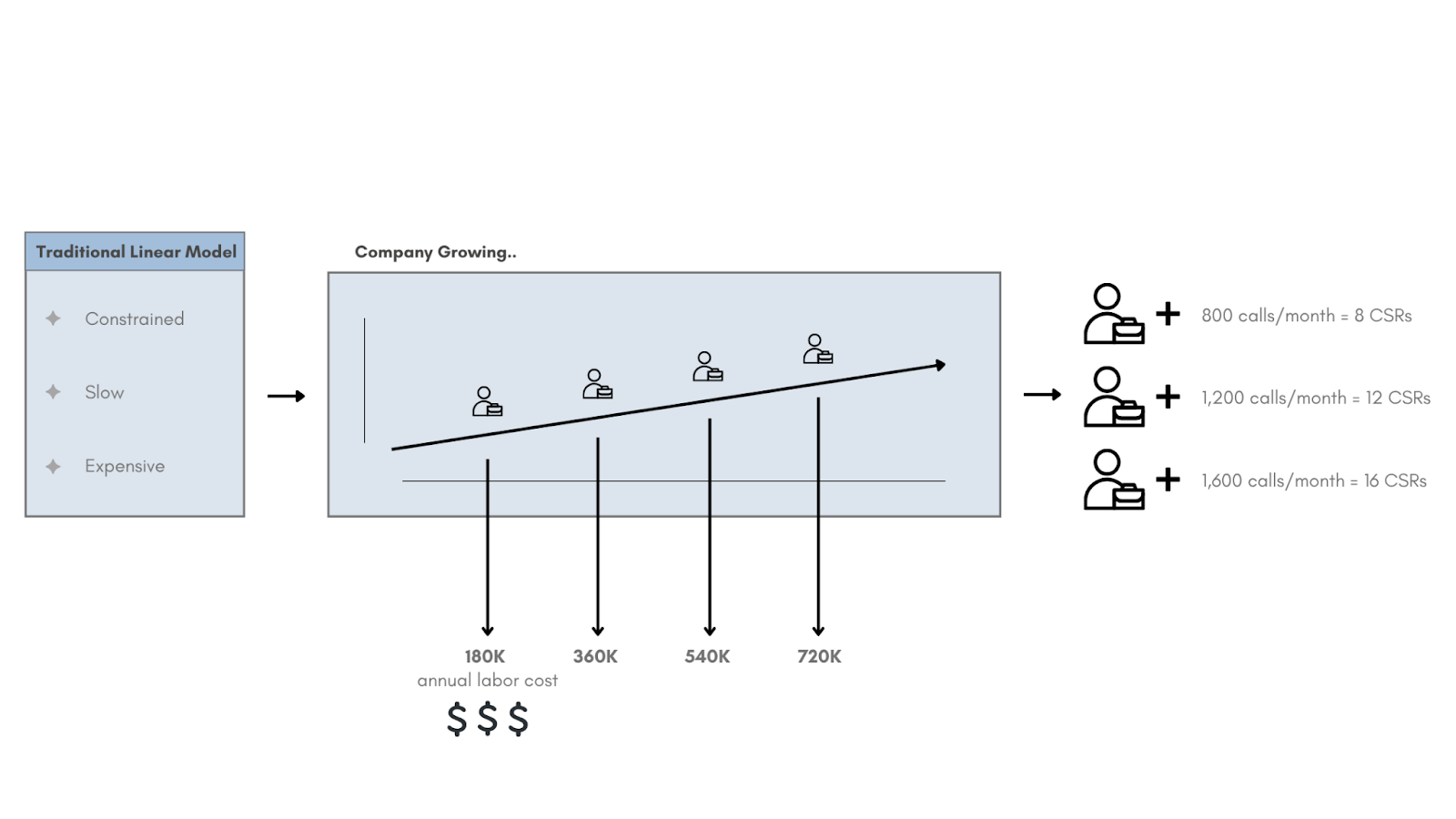
Compare your traditional model to one integrating AI:
What This Means for AI Agent Deployment Strategy
The release of Claude 4.5 doesn't just improve existing AI capabilities—it expands what's now practical to automate. Tasks that were "almost there" six months ago are now production-ready. Here's what becomes newly viable:
End-to-End RFP Response Automation
Instead of AI that highlights relevant sections for human review, you can now deploy agents that autonomously parse 150-page RFPs, extract requirements, check against your capabilities database, and populate initial proposal templates—reducing RFP response time from days to hours.
Autonomous Quote Processing
Field technicians can snap photos of handwritten quotes or equipment specs, and AI agents can reliably extract data, validate against inventory systems, calculate pricing, and create Salesforce opportunities—no QA bottleneck required.
Intelligent Call Routing and Resolution
After-hours virtual receptionists can now handle more complex customer scenarios, make judgment calls about urgency, and take appropriate action (emergency dispatch vs. next-day scheduling vs. information capture)—all while maintaining conversation quality that doesn't hurt your brand.
Submittal Package Review
Before submittals go to the GC, AI agents can now reliably check for missing documentation, flag specification mismatches, verify completeness across dozens of requirements, and even suggest corrections—cutting rejection cycles that cost time and credibility.
The Implementation Reality Check
Here's what construction and field service leaders need to understand: better AI models don't automatically translate to better business outcomes. The gap between "Claude 4.5 is more capable" and "our field-to-quote process is now automated" still requires purpose-built solutions designed for your specific workflows.
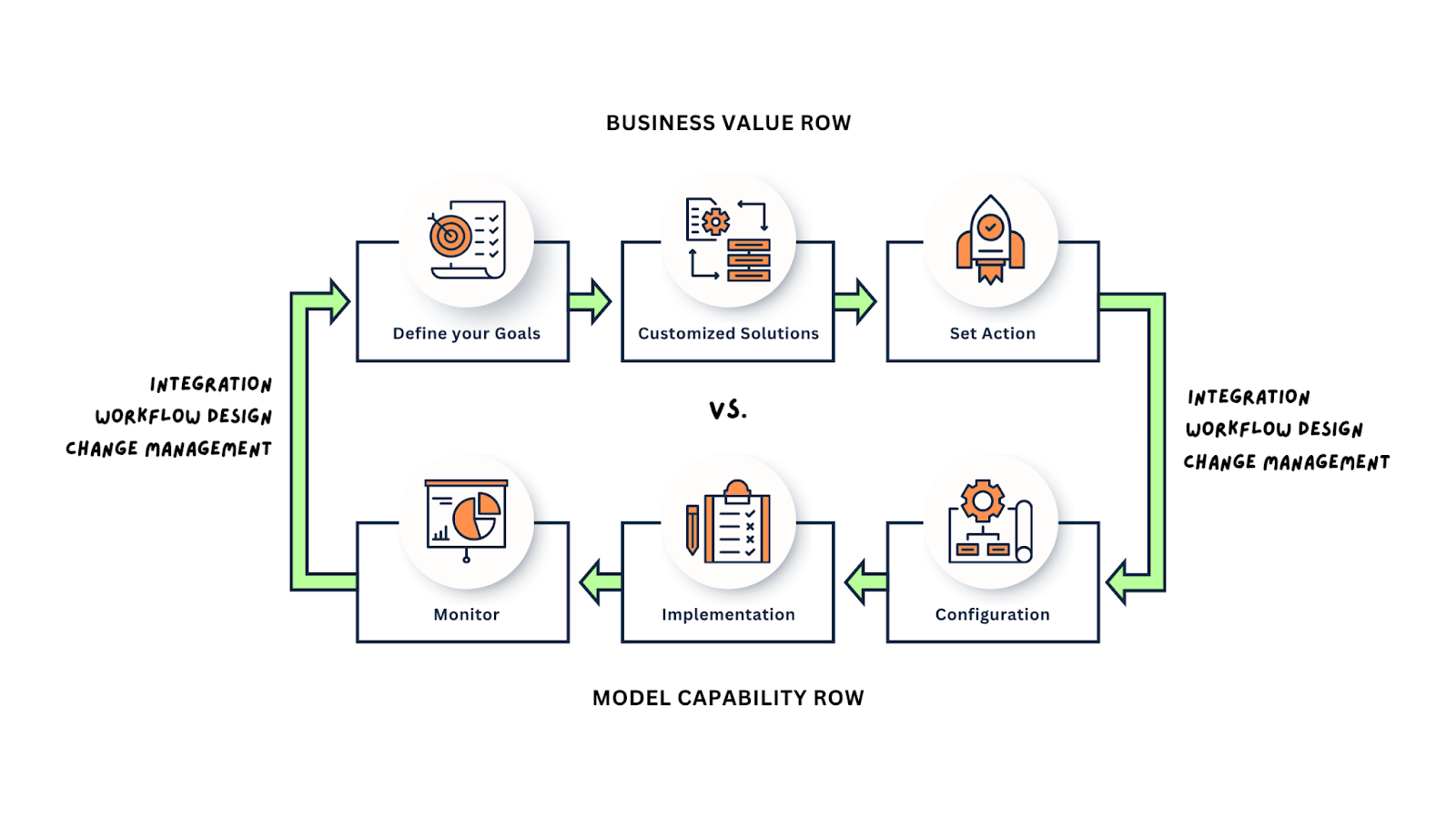
The companies that will capture value from Claude 4.5's improvements are those that:
- Start with specific, high-value use cases rather than trying to "implement AI" broadly
- Deploy pre-built, industry-specific agent solutions rather than custom-building from scratch
- Integrate deeply with existing systems (Salesforce, ServiceTitan, ServiceNow) rather than creating separate AI workflows
- Measure impact in operational terms—hours saved, revenue captured, error rates reduced—not AI metrics
For a $200M commercial contractor, this might mean starting with RFP analysis to win more bids faster. For a mid-market HVAC operation, it could be field-to-quote automation to eliminate the bottleneck between technician visits and proposal delivery. For a manufacturing firm, intelligent submittal review might prevent costly project delays.
The Bottom Line for Operations Leaders
Claude 4.5 represents a meaningful step forward in AI capability, but its value to your organization depends entirely on how it's applied to your specific operational challenges. The model itself is a tool—the question is whether you have the right implementation strategy to turn capability into business impact.
The field service and construction industries are historically late adopters of technology, often for good reason: new tools frequently over-promise and under-deliver in real-world field conditions. But the gap between AI promise and AI performance is narrowing rapidly, and Claude 4.5's release accelerates that timeline.
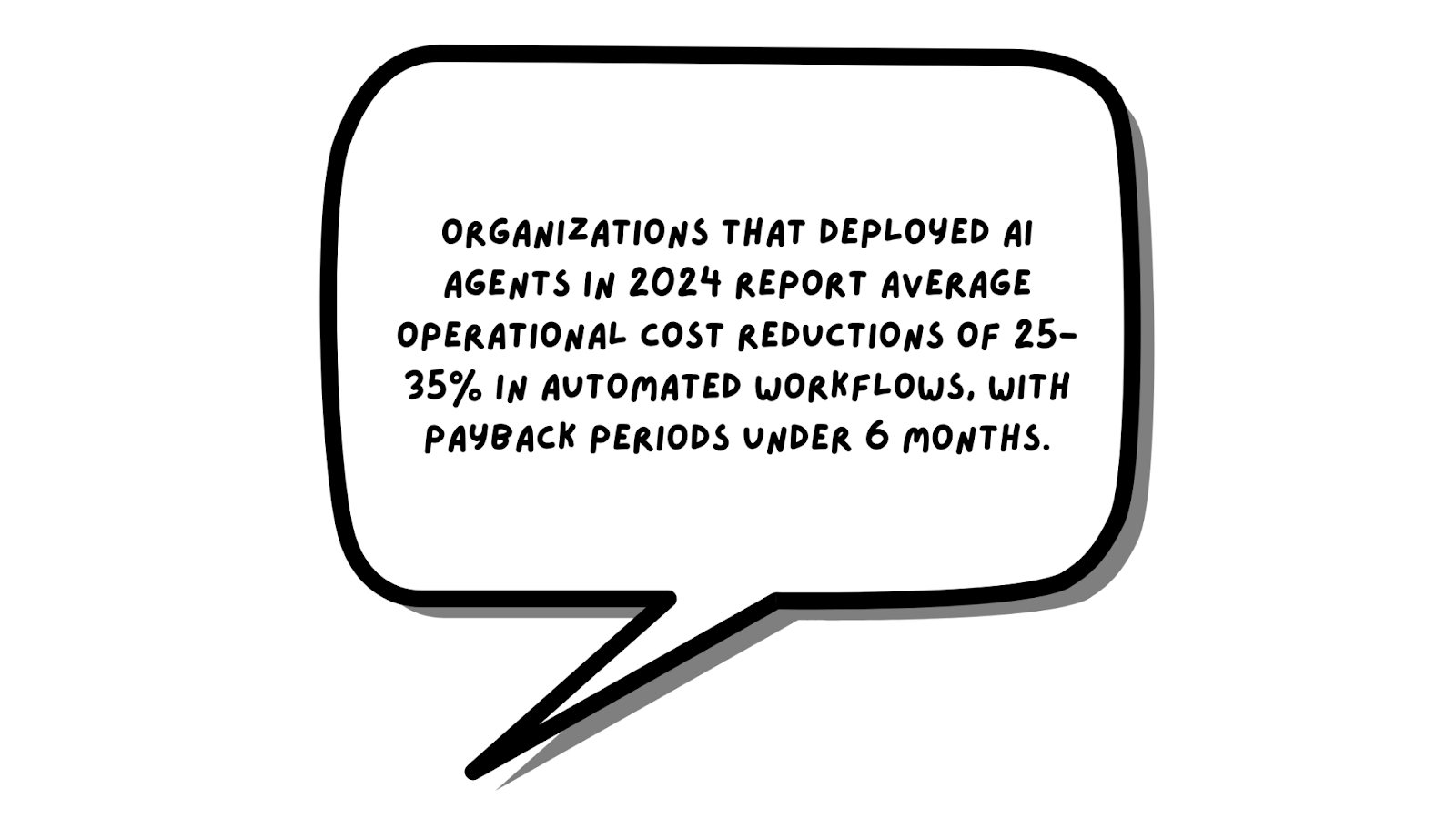
Source: Enterprise AI adoption surveys
For operations leaders at mid-market construction, field service, and manufacturing firms, the question is no longer whether AI agents can deliver value—it's whether your organization will move quickly enough to capture competitive advantage while others are still evaluating options.
The technology is ready. The question is: are you?
About Atreyus
Atreyus provides pre-built AI agent solutions for construction, field service, and manufacturing operations. Our purpose-built agents integrate seamlessly with Salesforce, ServiceTitan, and ServiceNow to eliminate manual bottlenecks in field-to-quote workflows, call center operations, RFP response, and submittal management. We help mid-market operations leaders deploy AI that delivers measurable ROI in weeks, not quarters.
Ready to see how Claude 4.5-powered agents can transform your operations? Schedule a demo.